
Imposter Game for Work and Team Building
Most team-building activities end the same way: someone groans, someone checks their phone, and everyone forgets it happened by Monday. The Imposter Game for work is different. It gets colleagues talking, laughing, and surprisingly good at reading each other, all inside a browser with zero setup.
Quick Answer:
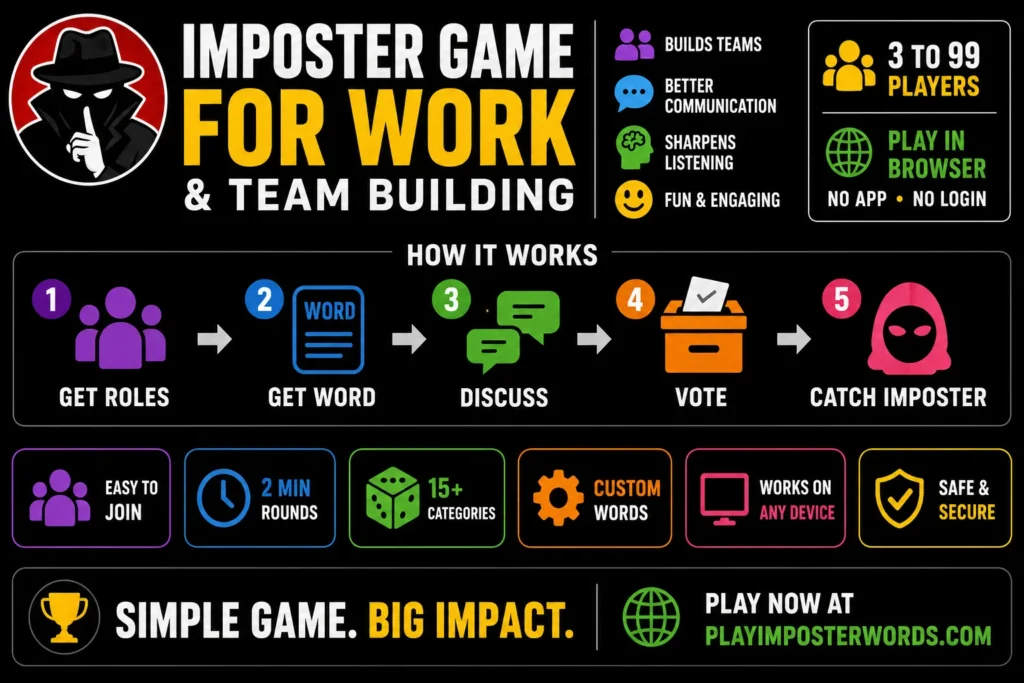
The Imposter Game for work is a browser-based word deduction game where players are secretly assigned “civilian” or “imposter” roles and given different words. Through group discussion, players vote out who they think the impostor is. It needs no app, no login, and supports up to 99 players, making it a strong fit for office team-building, remote meetings, and icebreaker sessions.
Why the Imposter Game Works for Team Building
Most word games either bore people or confuse them. The Imposter Game sits in a useful middle ground; it’s simple enough to explain in two minutes, but the social deduction element keeps people genuinely engaged. And that matters in a workplace context.
The core mechanic is this: everyone gets a secret word except the imposter, who gets nothing (or a similar but different word). Players take turns describing their word without saying it. The imposter has to bluff their way through. Everyone votes at the end. It sounds light, but it quietly builds real skills: active listening, reading body language, and clear communication under light pressure.
The deduction and discussion phase is where the team-building actually happens. People reveal how they think, how they phrase things, and how well they pay attention. You learn more about a colleague in one round of this game than in a week of status update meetings.
It also levels the playing field. Seniority doesn’t help you here. The quietest person in the room can be the most convincing imposter.
How to Run It in a Work Setting
Setting up an Imposter Game session for work takes about three minutes. Go to playimposterwords.com, create a room, choose a word category and discussion timer, then share the room link with your team. No downloads, no accounts, no IT approvals needed.
For in-person groups, everyone opens the link on their own device and peeks their secret word privately. The “pass and play” mode also works if devices are limited, where one phone gets passed around face-down. For remote teams, the host shares the room link in the meeting chat.
A few settings worth adjusting for work sessions: set the discussion timer to two minutes to keep rounds moving, choose the “give impostors a similar word” option so new players aren’t completely lost, and keep the imposter count at one for groups under eight people.
Running two or three short rounds works better than one long session. The first round is always a warm-up; people figure out how bold to be. By the second round, the group is noticeably more comfortable talking to each other.
Remote Teams vs In-Office Groups: What Changes?
For remote teams, the Imposter Game actually performs better than many in-person alternatives. Everyone joins the same online room through their browser, the word reveal happens on each person’s screen, and the discussion happens over the existing video call. No extra tools. No breakout room setup.
The one adjustment for remote sessions: ask everyone to keep their camera on during the discussion phase. A lot of the fun (and the tells) comes from watching someone’s face when they’re trying to bluff.
In-office groups benefit from the pass-and-play mode on a shared device, though individual devices are simpler. The advantage in person is that you can read physical reactions, something remote players lose. That said, remote games tend to run tighter because people have to listen more carefully without visual distractions.
The sweet spot for both formats is four to eight players per game. Larger teams can split into smaller rooms and compare results afterward, which adds a competitive layer that works well for department-level events.
Word Category Tips for Professional Groups
Category selection makes or breaks a work session. The goal is to find words everyone recognizes without making the game feel like a quiz.
Food and everyday life categories are safe starting points; almost everyone can describe “coffee” or “keyboard” without difficulty. Sports categories can work, but only if the group is reasonably sports-aware; otherwise, the imposter gets revealed by accident when half the room is equally confused.
Funny and themed word packs are worth trying once the group has one round under their belt. Humor opens up faster once people are already relaxed.
Custom words are the most underused feature. Team leads can create word pairs tied to the company’s own context, product names, industry terms, and office running jokes. It makes the game feel specific to the team rather than generic, and that specificity tends to get people more invested.
Game Settings That Make Work Sessions Run Smoother
- Use the two-minute discussion timer. Without it, rounds drag while one person overthinks their clue. A timer creates natural urgency and keeps energy up across the group.
- Start with one imposter regardless of group size. Introducing multiple impostors too early confuses new players and makes voting feel random rather than deductive. Add a second imposter once the group has played a few rounds.
- Enable “give impostors a similar word.” This option gives the imposter a related but different word instead of nothing, which makes bluffing more interesting and reduces the chance that a new player is instantly obvious.
- Choose a category that matches your group’s energy level. A Monday morning session calls for simple, familiar categories. An end-of-week social session can handle funnier or more obscure word packs.
- Debrief after each round. Spend 60 seconds asking what clues gave the imposter away. This turns the game into a light communication exercise and gives quieter team members a reason to speak up.
Mistakes That Kill the Vibe
Running too many rounds back-to-back is the most common problem. After four or five consecutive rounds, the novelty wears off, and people start going through the motions. Two to three rounds are usually the right amount for a 20-30 minute team session.
Picking categories the group doesn’t connect with kills engagement fast. If half the room gets a sports word they don’t recognize, they describe it badly, not because they’re bluffing, but because they’re genuinely lost. That’s not fun; it’s just embarrassing. Read the room before choosing.
Not adjusting the impostor count for small groups is another easy mistake. Three players and two impostors mean the majority of the room is lying, which makes deduction pointless. For small groups, one imposter is always the better call.
Skipping the discussion phase or letting it become one person talking while others scroll removes the entire value of the game. The discussion is where team-building actually happens. If people aren’t talking, the session isn’t working.
Frequently Asked Questions
Final Thoughts:
The Imposter Game for work earns its place in a team-building toolkit because it doesn’t feel like team building; it just feels like a game. People talk, they get competitive, someone reveals they’re a surprisingly good liar, and the group learns something small but real about each other.
Start with one room, two rounds, and a familiar word category. Adjust from there based on how the group responds. The setup is fast enough that you can test it in the last 20 minutes of a meeting without anyone needing to prepare.
The best team-building exercise is one people actually want to do again next week.