Funny Imposter Game Words That Will Make You Laugh
Someone once accused me of being a Funny Imposter Game because my clue for “toilet” was “too poetic.” They weren’t wrong. But that’s exactly what makes the funny imposter game so addictive, one ridiculous word, and suddenly everyone’s losing it.
Quick Answer:
The funny imposter game is a word-based social deduction game where one player gets a different (often absurd) word while others share the same one. Using hilarious word categories like body parts, food fails, or embarrassing situations makes every round unpredictable, chaotic, and genuinely hard to keep a straight face through.
What Makes a Word Actually Funny in the Imposter Game
Not every weird word is a funny word. That’s the distinction most people miss.
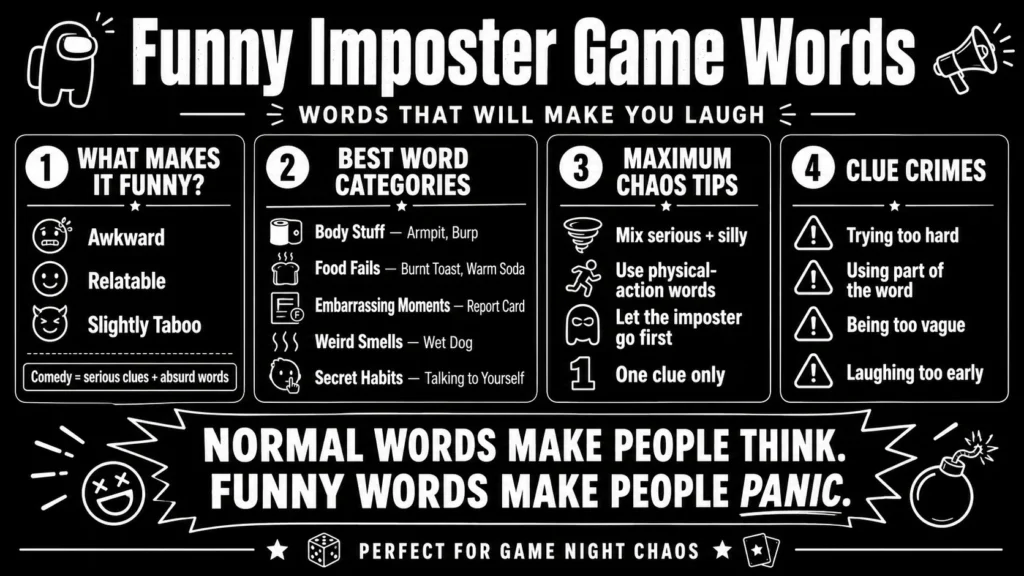
A word becomes genuinely funny in the imposter game when it creates natural awkwardness, as giving a clue forces someone to say something they’d never say out loud in normal conversation. “Armpit.” “Expired milk.” “Dad joke.” These work because describing them seriously is inherently ridiculous.
Here’s the thing: the funniest rounds happen when the word itself is totally normal, but the context makes it strange. “Socks” sounds boring until someone gives the clue “intimately familiar with feet,” and the whole room collapses. The gap between the serious delivery and the absurd word is where the comedy lives.
What surprised me was how much word pairing matters. In the funny imposter game, the imposter gets a related-but-wrong word. So if the real word is “Burp,” the imposter might get “Hiccup.” Both are body sounds, both are embarrassing, but describing one while pretending it’s the other creates this beautiful slow-burn confusion that nobody sees coming.
So the formula is simple: embarrassing + relatable + slightly taboo = comedy gold every single time.
The Best Funny Word Categories to Use
Some categories just hit different when you’re trying not to laugh.
Body stuff wins every time. Words like “Belch,” “Snore,” “Toe,” and “Belly button” force players into genuinely uncomfortable clue territory. Watching someone try to describe “Armpit” using only sophisticated vocabulary is, honestly, one of the funniest things you’ll witness at a game night.
Food fails are a close second. “Soggy cereal,” “Burnt toast,” “Gas station sushi”, these words create instant shared disgust, and the imposter trying to blend in while describing something they’ve never personally experienced emotionally? Priceless.
I once played a round where the word was “Mayonnaise,” and the imposter had “Butter.” The imposter kept saying things like “creamy, you’d spread it” and somehow survived three rounds before anyone caught on. That game haunts me.
Here are the categories that consistently produce the funniest rounds:
- Awkward body moments: Snore, Belch, Sweat, Itch
- Food disasters: Burnt popcorn, Stale bread, Warm soda
- Childhood embarrassments: Report card, Principal’s office, Forgotten homework
- Very specific smells: Old sponge, Morning breath, Wet dog
- Things nobody admits to doing: Talking to yourself, Eating over the sink, Googling your own name
And yes, that last one is a real category I added after a very honest conversation with myself at 2 am.
How Absurd Words Change the Way You Play
Normal words make people think. Funny words make people panic.
When you drop “Armpit” or “Embarrassing photo” into the word pool, something shifts in the room. Players stop being strategic and start being reactive. The imposter who’s trying to fake their way through a word they don’t have suddenly has to maintain a straight face while other people describe body odor with academic seriousness.
Actually: scratch that. What I mean is: the comedy doesn’t come from the word itself. It comes from watching serious people try not to laugh while pretending they’re not the imposter.
The timing matters. A lot, actually. In regular imposter games, you can take a moment to think. In a funny word round, hesitating even slightly reads as guilty because everyone assumes if you can’t describe “Belly button” in two seconds, you’re hiding something. That pressure makes the bluffs messier, the accusations wilder, and the whole game about 40% louder.
But here’s what nobody tells you: funny words are harder for the imposter. Civilians can lean into the silliness naturally. The imposter has to be silly in exactly the right way, too much, and they look fake, too little, and they look like they’re not in on the joke.
Word Master Moves: Tips for Maximum Chaos
- Mix serious and silly words in the same session. Going full absurd the whole time gets predictable fast. Throw in “Passport” or “Library” between the funny rounds, then hit them with “Toe fungus.” The contrast makes the funny words hit twice as hard.
- Use words that require physical description. “Handshake,” “Sneeze,” and “Shrug” are words that make people want to demonstrate with their bodies. Someone miming a sneeze while trying not to give away their word is comedy that no writer could plan.
- Let the imposter go first occasionally. Standard strategy says don’t go first as the imposter. But in funny rounds, going first with a confident, ridiculous clue can throw everyone off completely. Nobody expects the imposter to open with “It’s the sound of a disappointed parent.”
- Create a “hall of shame” for the worst clues. Write down the most disastrous clues from each round. By the end of the night, reading them back out loud with no context is funnier than the actual game. This has become a ritual in every group I’ve played with.
- Set a one-clue rule for maximum pressure. Each player gets exactly one sentence. No follow-up, no clarification. This forces people to commit to their clue immediately, which is where the best accidental confessions happen.
Clue Crimes: Mistakes That Kill the Funny
Trying too hard to be funny
The funniest moments in the funny imposter game are accidental. When someone constructs an elaborate joke clue on purpose, it lands flat. The comedy comes from genuine awkwardness, not performance. Let the word do the work.
Using the word itself even partially
This sounds obvious, but happens constantly with silly words. Someone gets “Burp” and says, “It’s like a small… release… from the stomach area.” You’ve just said the word in slow motion. The imposter spotted it immediately, and so did everyone else.
Going too vague because you’re embarrassed
This is huge. Players get a mildly awkward word like “Sweat” and go so abstract, “something the body does” that their clue could apply to literally everything. Vague doesn’t protect you in a funny round. It just makes you look guilty and boring simultaneously.
Laughing before you give your clue
Pre-clue giggling is basically a confession. If you’ve already cracked up before you’ve said anything, every other player now knows your word is the funny one and, by extension, whether you’re the imposter or not. Save the laughing for after.
Frequently Asked Questions
Final Thoughts
The funny imposter game lives or dies by its word list. Get the categories right: awkward, relatable, slightly ridiculous, and you won’t need to force a single laugh. They just happen.
Start with body humor and food disasters. Build from there once your group gets comfortable with the format.
And if someone accuses you of being the imposter just because your clue for “Morning breath” was unexpectedly poetic, honestly, that’s a compliment.