
How to Be a Good Imposter: Tips, Tricks & Strategies That Actually Work
I got caught in my very first round. Said “it’s something you cook with” when the word was clearly something you’d never cook with. Everyone stared. Someone just pointed at me and said: “Yep, that’s them.” Round over in 90 seconds. Humiliating.
After dozens of rounds on playimposterwords.com, some wins, more losses than I’d like to admit, here’s what actually separates a great imposter from someone who gets caught in the first minute.
Quick Answer:
To be a good imposter, blend in by giving vague but confident descriptions, mirror civilian language without copying it exactly, never speak first, and control your reaction when you’re accused. The best imposters on playimposterwords.com don’t try to fake knowledge; they redirect attention, ask smart questions, and let the group’s chaos do the work.
What Being a Good Imposter Actually Means
Here’s the thing most new players get wrong: being a good imposter isn’t about lying convincingly. It’s about making everyone else doubt themselves enough that they don’t confidently point at you.
The imposter word game assigns civilians one word and gives them either a similar word or nothing at all. Your job isn’t to know the word. Your job is to look like someone who does. That’s a completely different skill.
I’ve watched players get the civilian word and still get voted out because they described it badly. And I’ve watched imposters with zero information survive six rounds of discussion by doing almost nothing. The imposter who talks least wins most. Not always, but more often than you’d expect.
The game at playimposterwords.com gives you the option to receive a similar word, which is honestly a good setting for beginners. It gives you just enough to work with. Turn it off once you’re comfortable playing with no word at all; that’s where the real skill kicks in.
Best imposter game word categories for beginners
The Core Strategy: Vague Confidence
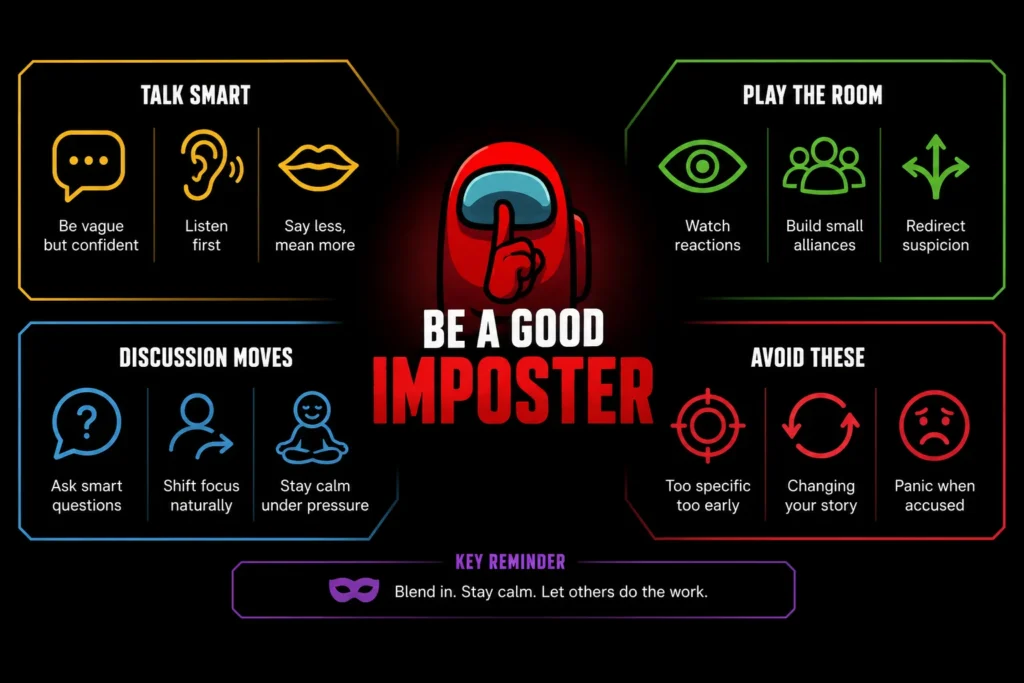
Actually: scratch that. Let me reframe this properly. Vague confidence doesn’t mean mumbling something uncertain and hoping nobody notices. It means giving an answer that sounds like you know exactly what you’re talking about, while technically saying nothing specific.
Example. The word is “Mountain.” A nervous imposter says, “It’s… big? And you can climb it, maybe?” That’s a red flag. A smart imposter says, “It’s something that takes real endurance to deal with; not everyone can handle it.” Confident. Relatable. Says absolutely nothing specific.
The key is to describe feelings and experiences around the word rather than the word itself. Describe the vibe, not the thing.
This works because civilians are also being vague on purpose; they don’t want to make it too obvious either. So when everyone’s describing feelings and associations, you blend right in.
So the question isn’t “what do I know about this word?” It’s “what kind of experience does this word create?” That’s a question you can always answer, even with no information.
How to Talk Without Giving Yourself Away
Timing is everything. A lot, actually.
Never speak first. The first person to describe the word in a round sets a reference point for everyone else. If you go first with no word, you’re guessing blind and giving the group something to compare against. Let two or three civilians go, absorb the language they use, then mirror it back with your own spin.
Pay attention to specific words civilians choose. If three people use the word “smooth” in their descriptions, work “smooth” naturally into yours, but don’t copy the exact sentence structure. Word-for-word copying is just as suspicious as saying something completely unrelated.
And here’s something I learned the embarrassing way: don’t over-explain. New imposters talk too much, trying to sound convincing. Real civilians give short, casual descriptions because they already know the word; they’re not trying to prove anything. The more you explain, the more you look like someone who’s compensating.
(I once gave a 45-second description of why something was “really fundamental to everyday life” for a word that turned out to be “spoon.” The table went quiet. Not good.)
How to Be a Good Imposter: The Skill Nobody Talks About
Being a good imposter isn’t just about what you say. It’s about watching what other people do when they say things.
When a civilian gives their clue, watch the faces around the table. Someone who nods slightly probably recognizes the connection. Someone who looks blank might be an imposter too, or just confused. Either way, that information is useful.
In the discussion phase, the imposter’s best weapon is redirection. Instead of defending yourself when accused, immediately cast reasonable doubt on someone else. Not aggressively, that looks desperate. Casually. “I get why you’re looking at me, but did anyone else notice how weirdly specific Marcus’s clue was?” That single sentence shifts the group’s focus without you having to prove anything.
I spent way too long playing defense in early rounds. The players who win consistently play offense; they shape the conversation instead of reacting to it.
On playimposterwords.com, the discussion timer adds real pressure here. Shorter timers actually help imposters because there’s less time for the group to build a proper case. If you’re hosting and you’re the imposter type, suggest a one-minute timer.
Imposter Survival Tips That Win Rounds
- Let the first accusation land on someone else. Don’t jump to deny anything the moment the discussion starts. Silence reads as calm confidence, not guilt, as long as you’re engaged and nodding, not frozen.
- Ask one genuine-sounding question during the discussion. Something like “wait, are we thinking about this the same way?” sounds like civilian curiosity. It also buys you 30 seconds while people reconsider.
- If you get a similar word, use it cautiously. “Mountain” vs. “Hill”: the civilian word is Mountain. If you keep emphasizing smallness or accessibility, sharp players will notice. Use a similar word as a general direction, not a specific description.
- Build a small alliance early. Pick one player who seems uncertain and gently agree with their clue in the first round. “Yeah, that’s kind of what I was thinking too.” Now they’re less likely to vote against you; people protect allies.
- React naturally to the reveal. When the imposter is caught, whether it’s you or not, your reaction is being watched. Genuine surprise looks different from performed surprise. If you’ve been caught, just own it and laugh. Graceful losers get invited back next round.
Mistakes That Get You Caught Every Time
Going too specific too fast
If you’ve never actually heard the civilian word and you somehow nail an extremely specific detail in your first clue, people notice. Experienced players know that oddly precise descriptions from someone who looks unsure are a giveaway. Stay general until you’ve heard enough from civilians to calibrate.
Changing your story mid-round
You said it felt “cold and distant” in round one. Now, in the voting discussion, you’re saying it’s “warm and familiar.” That’s the kind of inconsistency that gets you caught even when your original clue was decent. Commit to your angle.
Panicking when accused
The moment you get flustered, stumble over words, or start talking too fast, the group can smell it. Being accused doesn’t mean you’re caught. Half the time, the group accuses the wrong person. Breathe, respond calmly, and redirect.
Ignoring the similar word setting
New players on playimposterwords.com sometimes turn off the “give imposters a similar word” option too early. Playing with no word is significantly harder; you’re not just bluffing about what the word means, you’re bluffing about having any information at all. Master the similar-word version first.
Frequently Asked Questions
Final Thoughts
The difference between a good imposter and a caught one comes down to three things: when you speak, how much you say, and whether you’re watching the room or just focused on your own clue.
Start with the similar-word setting on playimposterwords.com until the basic strategy feels natural. Then turn it off and see how long you last with nothing. That’s where the real game begins.
Getting caught is part of it. Everyone gets caught. The players who get good are the ones who study why.